Monday, June 3, 2013

The Absolutely True Diary of a Part-Time Indian

Subject: Junior is an adolescent teenage Indian who was born with water on the brain. As if being a freshman in high school isn't hard enough, Junior gets beat up on a daily basis and constantly struggles with the fact that he will grow up to be poor and drunken just like most of the other indians on his reservation. Sometimes all he has keeping his sanity in check are his cartoons and his best friend Rowdy, a tough brute of a boy who secretly has a warm heart. 

The day that Junior realizes that him and his geometry class are using the same text books as their parents, he finally cracks. After he chucks the book at his teacher's face he realizes that he needs to get away from his reservation, and fast. He decides to do what no other Indian has ever done and transfers to Reardan High School, a white, rich-kid school outside of the reservation. 

Though it takes a few months, Junior eventually adjusts to the new atmosphere. He even manages to snag the most popular girl in school, Penelope, as his girlfriend, and becomes a star on the varsity basketball team. As Junior becomes more accustomed to his new life, he struggles to figure out who his real friends are and who, ultimately, he is. 

Through moments of extreme isolation and experiencing too many losses in a small period of time, Junior learns total perseverance and is able to recognize the things that mean the most to him in his life. 

Occasion: This was author Sherman Alexie's first novel. He writes based on experiences from his teenage years living on an Indian reservation. He may write this on the occasion that few people really know about the struggles faced on reservations and he wants to inform people about this issue. 

Audience: Based on the simple vocabulary, the entertaining cartoons, and the contents which is only capable of a teenage boy, I would guess that this light-hearted, humorous novel is written for preteens and teens. With that said, it's a fun read and I think most adults would enjoy it as well. It could also be targeted for children and teenagers on Indian reservations who feel that their situation is unchangeable. Junior, or more realistically Sherman Alexie, is the perfect example of a Native-American who was able to escape the normalcies of the reservation. 

Purpose: I believe that Alexie wrote this novel mostly for the sake of entertainment. Reading it is thoroughly engulfing and at times hilarious. Getting inside the head of self-conscious and relatively nerdy teenage boy is bound to be funny. As I said before, Alexie may have also written this book to educate the public about the struggles of being an Indian living on a reservation tied down by poverty and alcoholism. 

Style: Alexi uses many short, simple sentences throughout the book. His style is very informal and adolescent. Throughout the story, Junior jumps from experience to experience, sharing his thoughts. The first sentence of the book pretty much sums up what the rest of the book is like. "I was born with water on the brain." Alexi's diction is simple and in some cases colloquial. It does a great job capturing the essence of a teenage male.

Tone: Alexi's tone in The Absolutely True Diary of a Part-Time Indian is  sarcastic and very diary-like. Junior doesn't hide anything. When he writes he isn't of getting into the nitty-gritty details. However his writing is only-skin deep, never making the reader feel Junior's emotions. This is most likely because Junior is very blunt about death and other serious losses. It may also be because Junior finds the humor in every situation he experiences, that is why this is a fun book to read. Alexi could have taken a way more depressing approach considering all of the sad things that happen throughout the book, but he chooses to write through Junior who is a teenage boy with teenage boy thoughts and an overall light-hearted tone. 

On a scale of 1- nerdy preteen I would give The Absolutely True Diary of a Part-Time Indian a nerdy preteen for it's wittiness and pure entertainment. 

Thursday, March 21, 2013

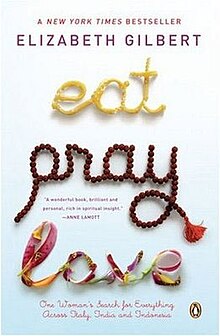
Eat Pray Love


When I was 13 years old, I got my fortune told by a little old man in Bali, Indonesia. With a one-toothed grin he took my hand and examined it. Although I don’t remember everything from my fortune, I remember he told me, in what English he knew, that I would get married once and have two children. He told my grandma that she would live to be one hundred seven, or was it one hundred three? We were never quite sure. We were both satisfied with our apparent futures afterward, but we were more excited that we had just met the most famous fortune teller in Bali, the same one who had taken the fortune of Elizabeth Gilbert, the author of Eat, Pray, Love only a few years earlier.
Liz Gilbert was stuck. After recently leaving a nasty divorce and having her heart broken  in a head-over-heals affair, she needed to do something to get away, to find herself. And what better way to accomplish this than by traveling. In the course of a year, Liz went on an exciting, heart-felt journey to Italy, India, and Bali learning many valuable lessons along the way. 
At the beginning of Eat, Pray, Love, Gilbert shares the dark time in her life after her divorce. Her melancholy tone makes it a relatively depressing start, but it’s obvious that the plot will look up. During this rough patch in her life, Liz got the chance to have her fortune told by that little old man in Bali. He said that she would lose all her money, but get it back soon, that she would get married again and added that she should come visit him in Bali and help him with his English. This sparked a new idea in Liz’s mind. She had been itching to go to Italy and learn Italian, but also wanted to go to India and master the art of meditation, and now she wanted to go to Bali too. She decided not to choose between them and to spend a year traveling to all of these magnificent places, and so the story began. In Italy Liz would discover the importance of pleasure; in India she would discover the power of God; and in Bali she would realize the capacity of the human heart and the love of self. 
Subject: This book is in itself almost a fairytale, a first-account look at traveling to beautiful places and enjoying yourself. But, more importantly this story is about self discovery and appreciating the small joys in life. It is a unique story because it is about doing exactly what your heart desires, something that is very difficult to do in today’s day and age. It is inspiring and could also pass as a self help book. 

Occasion: Liz’s story begins in New York City around the time that the World Trade Center was hit. This devastating event coupled with her divorce and severe depression lead to the occasion of this book being written. Being a writer, traveling the world for one year straight and experiencing a life changing journey was the perfect thing to write about.

Audience: If there is an intended audience for this book, it’s not obvious. It is simply a nice, personal story of perseverance. However, I think that the content of the book would appeal most to older women who are feeling stuck and are in need of a little push in order to become unstuck. I know that both my mom and grandma read this book and really enjoyed it. I read it and enjoyed it but couldn’t relate as well to the marriage aspect or the overall stress of an adult’s life. I also think that travelers would be drawn to this book just by the vivid, colorful descriptions of the beautiful destinations described. Anyone who loves traveling would appreciate the passion that Liz  has for going to new places and the wisdom she gains from new experiences. Finally, I think that religious people would like this book. Particularly people who are not strictly in one religion, but are interesting in many and have a strong belief in God. The author spends a lot of time describing her spiritual experiences and how God helped her persevere. But regardless, anyone who likes a soul-searching traveling story, will like this book. 

Purpose: I think the purpose of Liz Gilbert writing this book was to document her experience and give readers hope that they can turn their lives around. Eat, Pray, Love may also have given people a new vacation destination or two. It’s also an engaging storyline and could be read solely for entertainment.

Style: Elizabeth Gilbert uses relatively informal language throughout the book. While reading it it’s almost as if Gilbert is a friend of yours telling you a crazy story. She also has a biblical style when she delves into a spiritual topic. The structure of her writing is very unique. The subject jumped around a bit and every once in a while Gilbert would go on a tangent about a random side-story or history of an Italian word. She also used an abundance of parenthesis either for humor or to add an extra detail that really wasn’t necessary. The writing was also very verbose on occasions, almost to the point where the reader skips to the next page because it’s so redundant. Overall, a fun, easy read that holds the reader’s interest the majority of the time.

Tone: While the tone is light-hearted and fun, there are times when Gilbert comes off as self-centered. Because the writing is from her point of view and she is telling her story it makes sense that she should share her opinions, but in some cases he shares her opinion too strong, or comes off as being self-righteous. On the other hand, her added jokes and thoughts make her and the book more likable.  

In conclusion, I give this book a 4 out of 5 and would recommend this book to anyone looking a fun story.


-Katut Liyur the fortune teller


Thursday, January 10, 2013

In Pursuit of Excellence

Let me tell you something-- I’ve never gotten last place before. Or at least not in anything that mattered enough for me to care. I would joke about getting last place, just like any average athlete would do. “Well as long as I don’t get last... hahah” And my friends would laugh with me.  
That is, I had never gotten last until last Wednesday at Cross-country Skiing Nationals. When, here it goes: I got last. Yep, that’s right, bottom of the list, down by the sponsor’s logos and the date in which the results were printed. D.F.L. 
It’s a bad feeling. Even if you swear you don’t care about the results, you promise you are just racing for fun, it hurts. I fell and skidded on my behind on probably the worst possible place to fall in a 3 minute, 1 kilometer race. Nobody else fell. My fault, but even the best fall down sometimes, right? Wrong. I was devastated. How could I have been so unfocussed, so clumsy? Especially after all of the hours and hours of work I have put into ski racing? I needed some motivation, and fast.  
That night my mom handed me the book In the Pursuit of Excellence by Terry Orlick as an early birthday present, (my birthday was the next day). She said that this was the book that the U.S ski team coach had recommended his athletes to read. Reluctantly, I opened it and read the first few pages. 
It immediately dove into topics like motivation and focus, subjects that I was lacking at the time, and quite honestly I didn’t want to hear about amazing people who did amazing things because of their amazing dedication and focus. I wanted to hear about another person who skidded on their behind in a big race, got last, but then came back to be amazing. But slowly, once the “feel bad for myself” phase had worn off a little, the book began to grow on me. 
Terry Orlick is a world renowned sports psychologist who used to be a professional gymnast. His book In Pursuit of Excellence is the perfect guide for athletes who have a big goal in mind, in fact it’s good for anyone who has any goal in mind. First it talks about the wheel of excellence. This wheel contains seven sections and when all the parts are working and in harmony, you will be able to excel at anything, Orlick believes. The wheel looks something like this: circled around the outside edge lies the components: positive images, mental readiness, distraction control, and ongoing learning. Around the center of the wheel lies commitment, focussed connection, and finally, confidence. Throughout the book, Orlick goes into very fine detail on all of these subjects. He talks about everything from goal setting to the zen zone, and even has a chapter on getting through and learning from set backs, which I eagerly flipped to when I first got the book.  
This book is wonderful. I don’t know about all athletes, but I wonder all of the time  what it really takes to make it to the Olympics; what it really takes to be considered great. Now I know that it takes a whole lot more than an abundance of physical training, it takes an enormous amount of mental training. You need focus, intense focus. So focussed that you’re not even focussing anymore, you’re just in the zone. It also takes many goals, big and small. As Terry says, “Let’s say that you want to become the best performer you can be, or that you want to write a book. Great! What are you going to do about it in the next five minutes, hour, day, week, month, year?” (Orlick, 60) Big goals keep you on track, but small goals actually get you there. Orlick suggests that when you  wake up in the morning, you should write a list of all of the things you want to accomplish that day. This way, your goals are more concrete and you will be more motivated to get them done.  
Orlick writes this book in a suggestive, but not pushy manner. He proposes that anyone can accomplish or make significant progress towards their individual goals. He never says that you definitely can or can’t accomplish something, he lets you decide. He asks many questions regarding the reader’s dedication, focus, and goals. This makes reading the book more personal and really makes you think about how much you want to achieve your goal and if you are willing to give it your best. He writes simply and to the point. There is no beating around the bush, Orlick clearly states what it takes mentally to achieve your dreams, and the rest is up to you. 
I would recommend this book to anyone, because we all have things that we want to accomplish. When I was down in the dumps, this book helped me climb back up and realize that one bad race isn’t the end of the world. My skiing life isn’t over, the only thing that’s over is that bad race. It’s time to move on, set more goals, and go after them. I can do it, and so can you. This book is a first good step toward achieving anything. 

Rating Scale:

:,( Can’t finish the book no matter how hard I try
:( Not likin’ it. Barely finish it, but I don’t remember much
:/ It’s okay. I’ll read it if I have nothing better to do
:) Good! I would recommend it to others looking for a good book
:,D Amazing! Inspires me to be a better person

In Pursuit of Excellence gets a :,D


Monday, December 17, 2012

Snow

I feel happy because it's snowing. Along with many other snow-lovers I have been waiting patiently (at times) for the snow to begin falling. If you have ever woken up, looked out your window, and realized that while you were sleeping a thick blanket of snow covered the landscape, then you know how great of a feeling it is. Snow is great. It's awesome. It's fluffy and cold and crunchy. You can dive in a thick bank of snow and if feels like you are jumping into a cloud. Kind of. Snow is great to eat too. It melts in your mouth and sometimes turns into an ice cube. Snow makes the air smell fresh and clean. It falls gently from the sky and with plenty of concentration you can catch the snowflakes on your tongue. Christmas just isn't Christmas without snow. Last year did not feel like Christmas. It was brown outside and it was supposed to be white. If the world does end on Friday, it better be snowing. On Friday, I will be in Sun Valley, cross-country skiing, in the snow. So it would be a pretty good place to go.

Mountain snow forest trees Wallpaper

Anyway. This is a pretty lame post, especially considering it's my last one. In any case, it's been a great life.  
cute puppies!!!

Monday, November 5, 2012

Forward


If you keep hearing about all of the political drama going on on television, but are still unsure about which candidate to vote for, I am hear to tell you that you should vote for President Barack Obama, here’s why:


If you are a woman, or if you have young women you care about in your life, than President Obama is a better choice for you. He believes that women should have the right to make their own health care choices. Obama wants to keep Planned Parenthood and support the use of birth control in order to allow young women to control their lives. On the other hand, Mitt Romney is planning to get rid of Planned Parenthood and wants to limit the use of contraceptives in America, which severely restrict women’s rights. If you are a woman who has been raped or been a subject to incest, and Romney becomes president, you can’t get an abortion, and that simple choice could have the power to ruin the rest of your life. In short, Obama thinks that the government should stay out of important decisions like that. That sounds pretty fair to me.
If you are a college student or a teacher hoping to keep your job, Obama is the man for you. President Obama established a college tax credit and funded for Pell Grants which allowed the opportunity for many more students to go to college. He thinks  that anyone who works hard enough to go to college, should be able to, no matter what background they come from. On the other hand, Mitt Romney is planning to cut middle class investments which means that less money would be spent on Pell Grants for millions of students which ultimately leads to less students getting the chance to go to college. Voting for Obama is a good choice for teachers because Romney wants to "cut back" on teachers while Obama thinks that small class sizes are beneficial for everyone.

If you are a senior citizen, make your vote for Obama because he wants to strengthen Medicare. He believes that health insurance for the elderly should have free preventative services and lower costs on prescription drugs. Romney would turns Medicare into a voucher program which would make seniors pay loads more money each year. If you are a citizen in general, which I'm guessing you are if you are voting in this year's election, then voting for Obama will help you out too because Obama wants to put an end to health insurance abuses around the country. Have you ever heard of the health care horror stories where an insurance company drops you from their coverage right when you get sick, or a doctor can't perform a life-saving procedure because you don't have health insurance coverage? Well, President Obama is hoping to stop this inhumane behavior and get insurance companies to start doing what they are supposed to do; help people.

One of the main differences between Obama and Romney are their taxing plans. This topic seems to personify each candidate pretty well. Romney wants to tax all of the United States the same. Seems fair right? No. If you are taxing a millionaire the same amount as a family struggling with poverty, it will only make the poor poorer and will have little effete on the rich. Obama on the other hand wants to tax the rich a bit more and tax the poor a bit less, in order to help those who need money most. Now, if you are one of those millionaires who claims to need every penny, then go ahead, vote for Mitt Romney, but it's easy to see that the right thing to do is help those in need. 
Do your part, vote for Barack Obama in tomorrow's election.

Thursday, October 25, 2012

Running with the Mind of Meditation

There's nothing like a good hill to shut everyone up. Inhales, exhales, and clapping of your feet against the ground. That's all you hear. Your lungs begin to burn, though not as bad as your legs, as you look up to see the horizon line of the hill.  I can do this, you think. Then, within a moment you feel that sickening fire running up your legs and  that heavy led ball forming in your stomach. This is pain, this is running. Yet many people from all around the world do it everyday, some even for pleasure. 

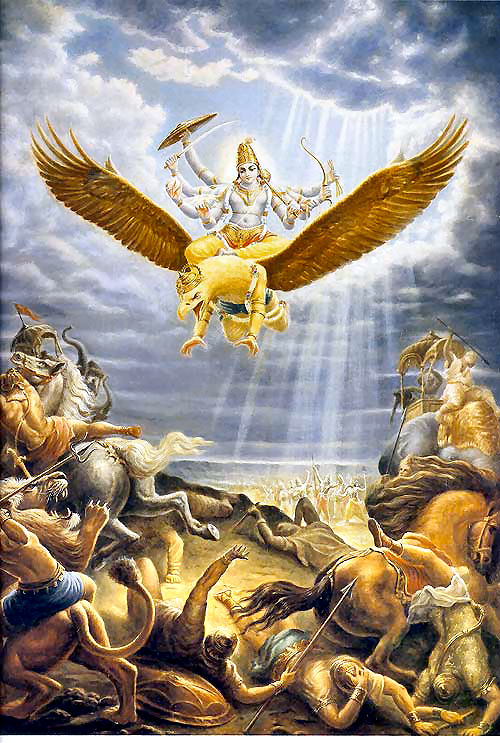
Sakyong Mipham is a well-known Buddhist meditation leader and he likes to run too. Now you may think, aren't sitting on a cushion completely still, and vigorously pounding your legs quite different? Well yes, and no. According to Mipham, in order to have a spiritual well being, you have to train the body by running and the mind by meditating. He even says that meditation can help your running. Mipham's book, Running with the Mind of Meditation, talks about running and meditation in stages. First the Tiger Stage, when you are a beginner and have to ease into the practice of both running and meditation; next the Lion Stage when you are in shape both mentally and physically and can use your new skills to enjoy yourself; third The Garuda (large birdish thing) Stage when you being to challenge yourself and push your limits; and finally the Dragon Stage when you can use your practice to help others. His book serves as a well thought out guide of how to begin meditating and running and how to progress and ultimately benefit as much as possible from your practice.


S (subjects): It's easy to tell by reading Running with the Mind of Meditation that Sakyong Mipham is a pretty spiritual guy. He grew up being exposed to many acclaimed meditation masters, one of them being his father. Because of this, he began meditating as a young kid. "When I was trained in my meditation as a child, I was asked to sit there and follow my breathe for an hour." (Mipham 30) Throughout the book, he talks about various experiences that have taught him lessons about life, primarily through running and meditation. The best way I can describe Mipham's voice is kind, gentle, and at times a bit humorous. Not to sound ridiculous or slightly creepy, but while reading his book, I really felt that Mipham was talking to me. He did a great job of hitting the idea of fusing meditation and running, and after finishing the book, I trusted him and felt pretty inspired to start meditating. 


O (occasion): The book was copyrighted in 2012 and written after Sakyong Mipham's ninth marathon. After feeling like an accomplished runner and meditator, Mipham may have felt inspired to share his experience through writing the book. In today's day and age it seems that more and more people are becoming distracted and being pulled from what's really important, happiness. Mipham may have felt that his book needed to be written in order to help people suffering from this type of 20th century depression.


A (audience): Speaking of those suffering people, this book is written for those who first of all, have at least a slight interest in both running and meditation. After all you don't want to read a book that doesn't interest you. I'm guessing that more women would be interested in reading this book than men because it has a slight self-help aspect to it, which I'm not sure men would be as motivated to read as women. It's an easy read, with a lot of introspective and philosophical ideas. It would appeal to the more spiritual type because it doesn't include very many facts and statistics, but rather uses many metaphors and universal ideas about life and happiness. Because the book has a lot to do with meditation, I think it's aimed for a middle aged audience because not very many children and teenagers feel the need to meditate. Because the book has a lot to do with running, I don't think it's aimed for the elderly or anyone who physically can't run, because obviously you don't want to read an instructional book based on an activity you can't participate in. 


P (purpose): I imagine that Mipham wrote Running with the Mind of Meditation to primarily educate readers on his extensive ideas and knowledge on the topics of running and meditating. I definitely learned a lot about keeping your brain calm during a brutal run as well as flushing away the effects after having "one of those days" by meditating. He's getting the idea out there that you don't have to be some far-fetched person in order to change your life. If you are willing to give his ideas some effort, he believes the rewards will come. His purpose of writing this book was genuinely to help others.


S (style): Although Mipham's vocabulary choice wasn't all that advanced, he still sounded very formal. He doesn't use American slang, which makes sense because he is Tibetan and always sounds calm, cool, and collected. He rarely uses exclamation points and rather sounds peaceful, just as you would imagine a Buddhist meditation master. He uses a lot of metaphors and similes, such as in this excerpt about the breath during meditation, "This calm trains the mind, which is like training a horse. Every time the horse wants to leave the trail because it sees some nice morsel of grass-be it a random discursive thought or a large fantasy-we bring the horse back to the trail. In this case, the trail is the breath." (Mipham 38) Mipham generally refers to the audience and people in general as "we" for example he says, "When we are running- and when we are exercising in general- we engage in one of the most intimate and meaningful acts that might occur during the day." (Mipham 79) Another feature he used throughout the book was telling the reader the Tibetan translation of select words. This was helpful for him when explaining because he was using a word that he felt described the word perfectly rather than using American words that didn't describe it quite as well. Overall, the style of the book was formal and informative, but it was able to stay very kind and personal.


T (Tone): Not to sound cheesy, but the feeling overall feelings that Mipham portrayed through his book are love and peace. He promotes the idea of a happy life, which everyone wants. He let readers know that they have the ability to control their minds and bodies, therefore controlling their lives. When reading his book, he makes it all sound so simple. He tells you that meditation will give you a clear mind and lists all of the benefits. I'll admit, while I was reading the book I had an inspired moment where I decided to take a few minutes to meditate (or at least attempt to meditate). Any book that gets you off your butt and motivated to get something done is a good book in my mind.


Rating Scale:
1- Boring, would rather check Facebook than read, not at all interesting, decide after first chapter that reading this book will negatively effect your life.
2- Looking at the page number every time you turn the page, some sections hold your interest, but before you know it you are daydreaming about your plans for the weekend.
3- Somewhat interesting. You feel like the content of the book is interesting, but it doesn't really connect with you on an emotional level.
4- You are into the book. You might even bring it on vacation and read a little if you have nothing better to do. You are interested in what the book is saying and you feel some what emotionally connected to it.
5- You cry, laugh, go run a couple miles on the treadmill, and call a friend to have a heart-to-heart, all while your dog watches you and laughs on the inside about how ridiculous you are. You love this book and will most likely reread it.

I give Running with the Mind of Meditation a 4.5


Monday, September 24, 2012

The Art of Racing in the Rain

I'll admit, I probably haven't read as many books as some people. But I do like to read. Lounging in your bed on a rainy day with a page turner is something I do on the occasion and I do enjoy. When I think back to all of the books I have read, I can't remember very many that I didn't like. But I do remember a select few that I could call my favorites. As an elementary schooler who had a rabid obsession with dogs, I was glued to the book A Dog's Life by Ann M. Martin. The story was told from the point of view of a dog and I just couldn't get enough of it. So it makes sense that I also loved reading Call of the Wild by Jack London. Those two books connected with me on a deep emotional level, which may or may not be a good thing considering that I could relate more to the life of a canine than a human...

The summer before last, the required reading for the entire Park City High School was The Art of Racing in the Rain by Garth Stein. Even though I no longer have hundreds of dog stuff animals guarding my room, my love for dogs is still going strong. I fell in love with this book for a second time reading it that summer. It comes from the point of view of Enzo, a good-hearted labrador who loves his owner Denny more than anything. Denny is a talented race car driver who's specialty is driving on wet pavement, hence the title "The Art of Racing in the Rain". Enzo the dog really seemed to capture the fun-loving, happy-go-lucky attitude that lies at the heart of every dog, and that's why I loved him. A less obvious aspect of the book also made it a winner in my mind. That was the little snippets of Enzo relating race-car driving to real life. As someone who has raced for most of my life, I could completely relate to the racing connections. The idea "your car goes where your eyes go" was used many times throughout the book and I can't agree more with that statement. 

Garth Stein wrote Enzo's character in such a way that he made you laugh, cry, and wonder if your best furry buddy sitting next to you is a lot more intelligent than you think. Although it was an easy read, the story was a winner and Stein's writing was colorful and created crisp images in your head as you read. If you love dogs I would definitely recommend this book. 
Heck even if you're a cat person I would still recommend it, maybe it will knock some sense into you...